
sparked a frenzy in sports card collecting – people were digging out old cards, chasing ne | The Lockdown Millionaire
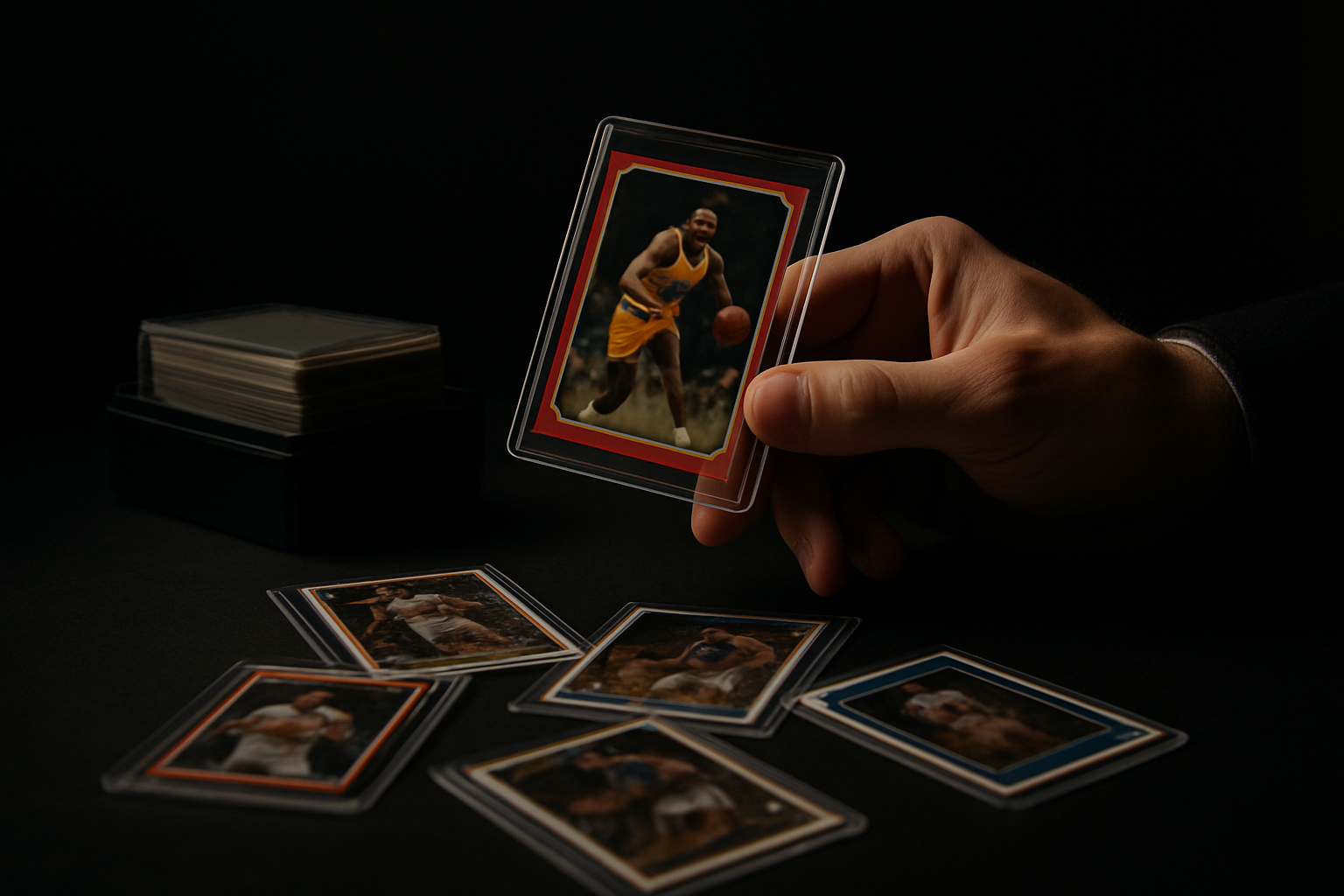
The sports collectibles market has gone through a dramatic transformation in just a few years. What started as a modern gold rush in sports card collecting quickly turned into a full-blown frenzy, with people pulling binders out of closets, hunting limited releases, and pushing prices to historic levels. At the peak, sports cards stopped feeling like nostalgic keepsakes and started behaving like serious alternative assets.
By 2022, that shift was impossible to ignore. Multiple cards sold for more than $5 million, and the $12.6 million sale of a mint Mickey Mantle card proved that eight-figure results were no longer reserved for fine art or rare watches. But as with any hot market, the hype couldn’t keep accelerating forever. The modern card segment has cooled since its peak, and today the smartest collectors are adapting. The big opportunity hasn’t disappeared—it has matured.
How Sports Cards Turned Into a Speculative Boom
The recent surge in sports card collecting was driven by a mix of nostalgia, scarcity, social media hype, and investor attention. Old cards that had been sitting untouched for decades suddenly looked like hidden treasure. At the same time, manufacturers kept feeding demand with new limited-edition parallels, serial-numbered inserts, and rookie cards marketed as must-own assets.
This created a perfect environment for speculation. Collectors weren’t just buying players they loved—they were buying what they hoped someone else would pay more for later. During the hottest phase of the boom, sealed boxes, graded rookies, and rare inserts rose sharply as demand flooded into the market.
That momentum produced headline-grabbing sales, but it also attracted short-term flippers. Once the market began to normalize, many of those speculators started cashing out, especially in the modern segment where supply and hype can shift quickly.
The 2022 Peak Changed the Market Forever
The major sales of 2022 gave the hobby a new level of legitimacy. When several sports cards crossed the $5 million mark—and the Mantle card reached $12.6 million—it sent a powerful message: elite collectibles had entered the same conversation as luxury investments.
That moment mattered for three reasons:
- It validated sports collectibles as a serious asset class.
- It drew in new capital from investors beyond traditional hobby circles.
- It widened the gap between truly rare items and overhyped, mass-chased products.
In other words, the market didn’t simply get bigger—it became more selective. Collectors began to understand that not all “rare” items are equally rare, and not every hot release deserves long-term premium pricing.
Why the Modern Card Market Has Cooled
After explosive growth, some pullback was inevitable. The modern sports card market has cooled slightly as the frenzy faded and buyers became more disciplined. Many recent cards were driven by momentum rather than lasting historical importance, and once the excitement softened, prices adjusted.
This doesn’t mean the hobby is in decline. It means the market is separating quality from noise.
Today, there is less appetite for buying every trendy rookie card at any price. Instead, more collectors are asking smarter questions:
- How limited is this item really?
- Will this still matter in 10 or 20 years?
- Is demand based on player legacy or short-term hype?
- Does the piece have genuine historical or emotional significance?
That shift is healthy. Market corrections often remove weak hands and expose what collectors truly value over the long run.
Vintage Cards and Ultra-Rare Inserts Still Command Respect
Even as parts of the modern market cool, top-tier vintage cards remain highly desirable. The reason is simple: true scarcity, historical importance, and established collector demand tend to hold up better than hype-driven modern supply.
A vintage card tied to a legendary player carries built-in significance that newer products often struggle to match. The same goes for ultra-rare modern inserts that are genuinely difficult to obtain and connected to iconic athletes. While broad categories may fluctuate, the very best items continue to attract deep-pocketed buyers.
For investors and collectors, this creates an important distinction. There is a major difference between:
- High-end, historically important collectibles
- Massively promoted products with temporary momentum
The first category tends to age well. The second often depends on timing.
Collectors Are Refocusing on Truly Unique Assets
One of the clearest post-boom trends is a growing preference for one-of-a-kind sports memorabilia over more common collectible formats. Reports in 2023 pointed to a rising appetite for game-worn trophy assets while enthusiasm for sports cards receded from peak levels.
This makes sense. A game-worn jersey from an iconic moment, a championship ring, or equipment used by a legendary athlete offers something many cards cannot: direct physical connection to sports history. These pieces are not just scarce—they are singular.
That uniqueness matters in a maturing market. When collectors become more selective, they often gravitate toward items with undeniable provenance, emotional pull, and museum-level appeal.
Examples of memorabilia gaining momentum
- Game-worn jerseys from championship runs or record-breaking performances
- Championship rings tied to historic teams or players
- Used equipment such as bats, gloves, helmets, or shoes from iconic moments
- Autographed pieces including signed balls, photos, helmets, and display items
A signed baseball is collectible. A game-used bat from a legendary player’s milestone performance is something else entirely.
Why Game-Used and Autographed Items Are Rising
There are several reasons this side of the market is gaining strength.
Tangible historical connection
Collectors increasingly want assets that feel close to the action. A jersey worn in a championship game or a helmet used by a superstar delivers a stronger emotional narrative than a mass-produced card pulled from a pack.
True scarcity
There may be thousands of cards featuring a player, but there are only so many items actually worn or used in defining moments. That natural scarcity gives premium memorabilia powerful long-term appeal.
Better authentication
Autograph and memorabilia authentication has improved significantly, giving buyers more confidence. Verified signatures and documented provenance reduce uncertainty, which is essential when serious money is involved.
Broader buyer appeal
High-end memorabilia often attracts both traditional collectors and sports fans who may not care about cards at all. That broader demand base can support stronger pricing over time.
What Smart Collectors Are Doing Now
The most successful participants in this market are no longer chasing everything. They are becoming more intentional, focusing on rarity, significance, condition, and authenticity.
Practical moves smart collectors are making include:
- Prioritizing vintage over speculative modern volume
- Targeting ultra-rare inserts instead of heavily printed mainstream releases
- Looking at game-used memorabilia with clear provenance
- Buying signed items authenticated by trusted services
- Avoiding hype-driven purchases based purely on short-term social buzz
For example, a collector who once spent aggressively on hot rookie cards might now prefer a well-documented game-worn jersey, a limited iconic insert, or a blue-chip vintage card with established demand. That is a more disciplined strategy—and likely a more durable one.
The Market Is Still Growing, Even as It Evolves
Despite the cooling in certain segments, the long-term growth story remains compelling. The financial upside continues to attract new collectors, investors, and platforms. Industry projections suggest that the global sports memorabilia and cards market, including physical and digital assets, could expand from roughly $33.6 billion in 2024 to $271 billion by 2034.
That kind of forecast highlights a crucial point: this is not a dead market after the boom. It is a developing one.
As the space grows, it is likely to become more professionalized, more data-driven, and more segmented. Premium assets with authentic rarity and historical meaning should continue to stand apart, while lower-quality speculative inventory may struggle to hold attention.
The Real Lesson From the Frenzy
The sports card boom taught collectors and investors an important lesson. Hype can bring people into a market, but only true scarcity, significance, and authenticity keep value there.
Yes, the frenzy sparked extraordinary sales and renewed interest in the hobby. Yes, some parts of the market have cooled. But the deeper shift is more interesting: collectors are becoming more sophisticated. They are moving away from blindly chasing the latest hot rookie and toward assets with lasting meaning—vintage grails, ultra-rare inserts, game-worn memorabilia, and authenticated autographs.
That is how markets mature. And for anyone looking to build wealth through collectibles, maturity is not bad news. It is where smarter opportunities begin.